
The found family trope becomes quite literal in Christian Petzold’s Miroirs No. 3, celebrating its U.S. premiere at the 63rd New York Film Festival. Upon first meeting Laura (Paula Beer), she seems “off.” It’s a feeling many will likely be able to relate to. We’re unsure of what exactly is causing our unease, yet it persists within us. It’s honestly a feeling that can wreak havoc in our lives. And it certainly doesn’t help having unsupportive company surrounding us in such instances. It’s the integrity and value of a support system that Petzold is clearly interrogating in this film. And he does so primarily through highlighting the absences. Miroirs No. 3 makes for a crafty film particularly in the clever ways he approaches writing his scenario. But it’s also in his sparse direction that the viewer can pick up on some of the ideas being toyed with in this strange set of circumstances.
If this is a film partially about seeking connection, it’s not difficult to understand why at face value. The film itself is one that feels isolating overall. Aside from the situation in which Petzold places his characters, so much of the film relies on isolated framing. Petzold often focuses the camera on a sole subject occupying a space, even if it might be a packed car or a full dinner table. Through this framing, it’s no wonder Laura feels alone despite heading off to a trip with her boyfriend and another couple. It’s a simple way of isolating both character and audience over the course of a brisk runtime. And this sense of isolation is one that roots itself in our subconscious as we watch the film. Miroirs No. 3, beyond its premise, tonally and visually heightens our awareness to keep us on our toes. This is a film that has a fair amount of style to it. It just goes about delivering that style in a rather quiet manner. We’re stuck with Laura for the remainder of her feelings of unease. And though much of the film is captured through her viewpoint, one could argue she isn’t even the central character of Petzold’s latest. It’s in the formal introduction of Betty (Barbara Auer) that Petzold begins to toy with audience expectations completely. It’s also where Miroirs No. 3 finds its greatest strength.

After Laura is unable to shake her feeling, she finally decides she no longer wants to partake in the planned group trip. And as far as unsupportive company goes, Laura’s boyfriend quickly relies on some manipulative tactics commonly found amongst conniving men. None of these methods work in his favor, but it’s no matter as Petzold delivers shocking retribution tenfold in the form of an unseen car accident. We have no idea what caused it, but we realize it occurred fairly quickly and instantly recognize the consequences as frightening. Laura makes it out unscathed though, and Betty, who was painting a fence just up the road, comes to her aid and calls the authorities. In the first of many strange turns, Laura asks if she can stay with Betty during her period of short recovery. Betty accepts without a moment’s hesitation. Petzold’s decision to not show any sort of deliberation will understandably cause the audience to wonder just what it is that might be occurring in Miroirs No. 3. It’s interesting that such overt kindness is often examined with perplexity before a sense of gratitude or ease of mind for audiences. But Petzold understands that intrigue is what cinema rests many of its laurels on. And even if audiences might walk away expecting more from this film on the whole, it certainly provides plenty of clashes with audience expectations as far as narrative and emotional depth goes.
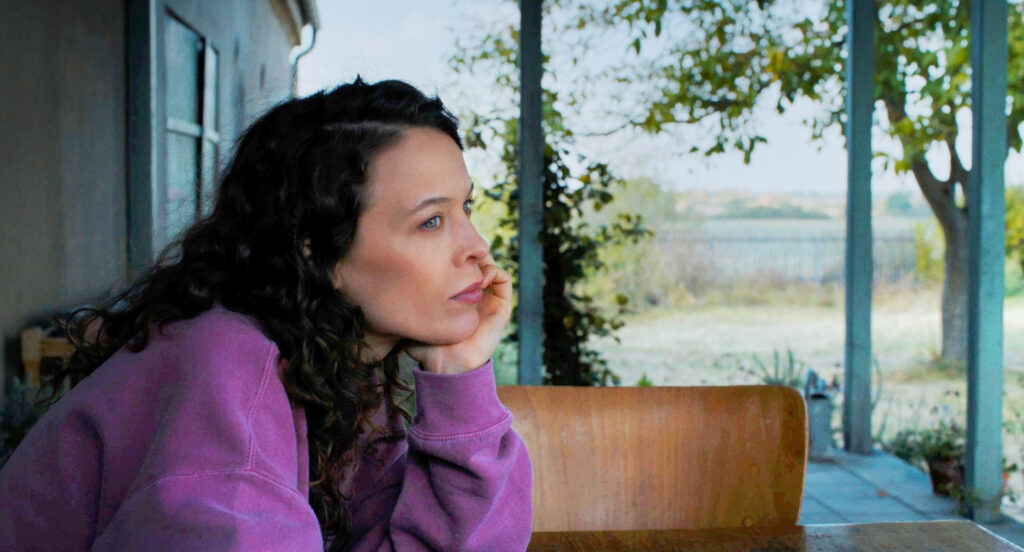
The initial set-up of Miroirs No. 3 would easily have anybody tricked into thinking they’re watching a more realistic version of Misery. But Petzold has more in mind than merely serving up a devious thriller for his audience. But that’s not to say he doesn’t lean into the expectation of delivering one. One key sequence has him utilize diegetic piano as a clever nod to the stylistic makings of a thriller. Coupled with a few other distinct choices, both visually or written, it’s clear Petzold knows what he’s doing. He’s manipulating an audience for the sake of our enjoyment and to elicit an emotional response of some sort. But those who were looking for a pure thriller should turn elsewhere. Because before we know it, this film shifts into something much closer to a drama playing out through tragedy than anything else. It’s not until Petzold’s lens ultimately shifts its focus onto Betty that this occurs. Because Laura is a character that feels paper-thin, the shift can feel a bit confounding at first. But in Betty comes more than enough emotional stakes that the film is able to sustain the turn and bring home a strong finale.
Betty is inherently the more compelling character of Miroirs No. 3. Auer is giving a multifaceted performance where, much like Laura, something is clearly “off;” and she isn’t doing all that much to hide it. Betty’s actions may speak otherwise, but her tone and facial expressions simply keep the audience on edge. And as we meet Betty’s husband, Richard (Matthias Brandt), and son, Max (Enno Trebs), there’s a clear shadiness to so much present within Petzold’s scenario. Pointedly, Petzold keeps both of them, as well as the audience, on the outskirts of her life at first. But again, this film ultimately isn’t a mystery to be solved or a horror to thrillingly escape. Miroirs No. 3 is more interested in the real world pain that comes with not having a support system in the face of emotional turmoil. Betty lives isolated from her own family just down the road, living amongst mementos in disrepair as a desperate way of clinging onto the past. This is a broken family, and the longer they don’t support one another, the deeper it breaks without the possibility of mending. But for all this examination, Petzold‘s final focus on the necessity of support leaves his audience with a moving, intriguing image. With a deceptive turn into dark comedy, which should honestly occur earlier to feel both more effective and fleshed out further, it shows that some situations might be too far gone. The damage is now irreparable, and what we might be left with is a hollow shell of what could have been. In the end, Petzold unleashes a simple, but wildly effective, quick burst of montage to highlight this. With three quick images set to a wistful piano tune, he depicts the ultimate tragedy present within his scenario: the supportive family unit that could have, and should have, been. Through simple direction and its effective chamber setting, the emotional resonance is felt despite the film feeling fairly rushed and stagnant at times. In presenting itself in such a way, Miroirs No. 3 goes down easy enough to warrant a compelling and engaging watch. And importantly, it makes me want to explore more of Petzold‘s filmography.
Miroirs No. 3 is celebrating its U.S. premiere at the 63rd New York Film Festival as part of the Main Slate section.