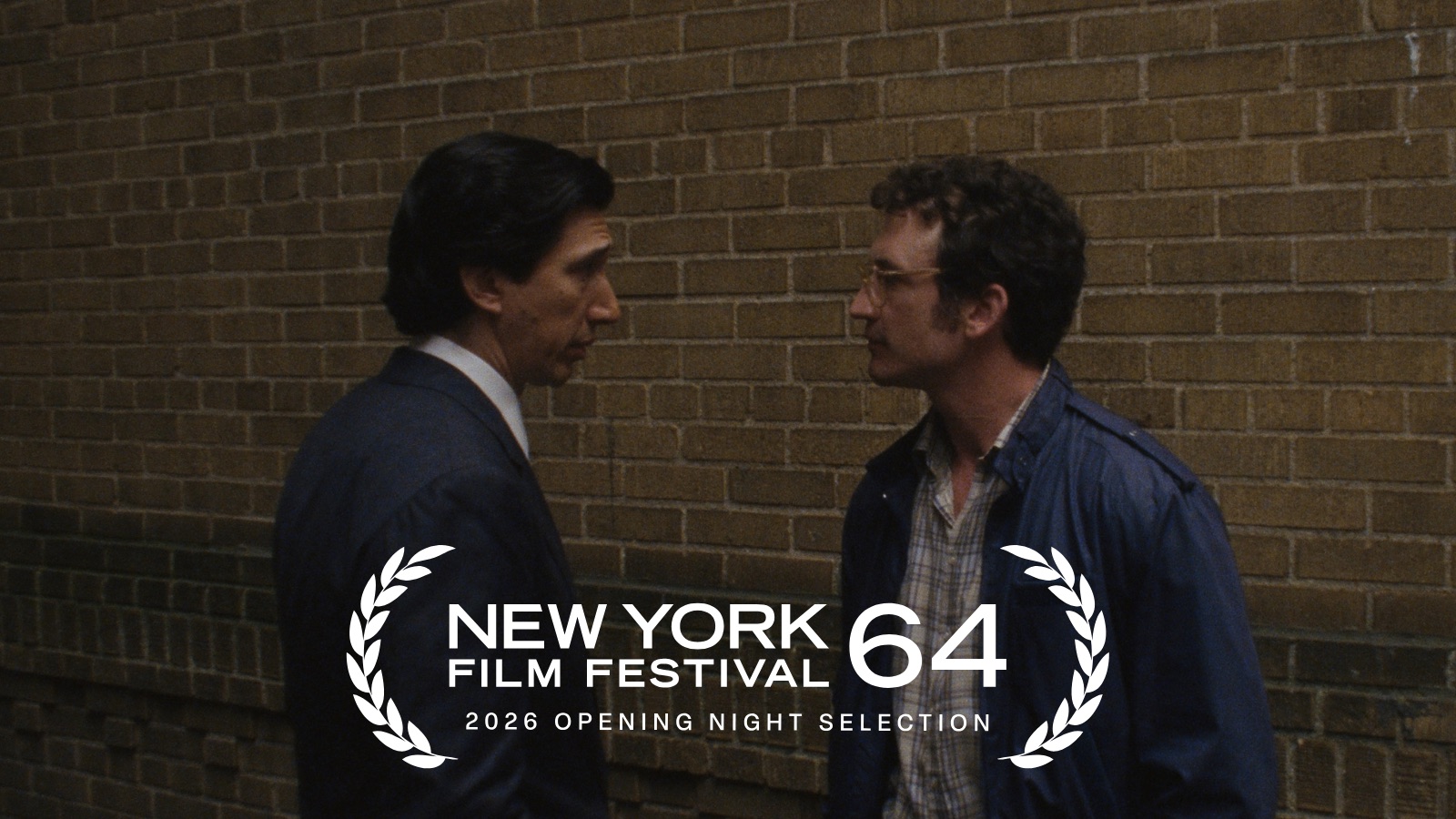
James Gray’s Paper Tiger comes home to New York City as the Opening Night film of the 64th New York Film Festival, and is kicking off the festival like a shot from a cannon. Representing New York through and through, this film takes a small-scale crime tale and channels it through a familial drama that feels operatic. And even if the events of Paper Tiger only affect a small family in Queens, the Pearl’s, the stakes couldn’t feel loftier. Because beyond just involving a really keyed-in set of performers who imbue such life and emotion into the characters, the film is just as interested in transposing their troubles onto the greater tale of New York City and its own ever-expanding series of issues. And through a particularly brilliant stroke of plotting, it’s humorous that a film so rich with subtext can just as easily revolve its central plot around the very blunt concept of cleaning up pollutants seeping into everything surrounding it. To get into the context of that requires Gray, his collaborators, and the audience, to be transported back to 1986 where this film and its warm 35mm cinematography feels directly unearthed from.
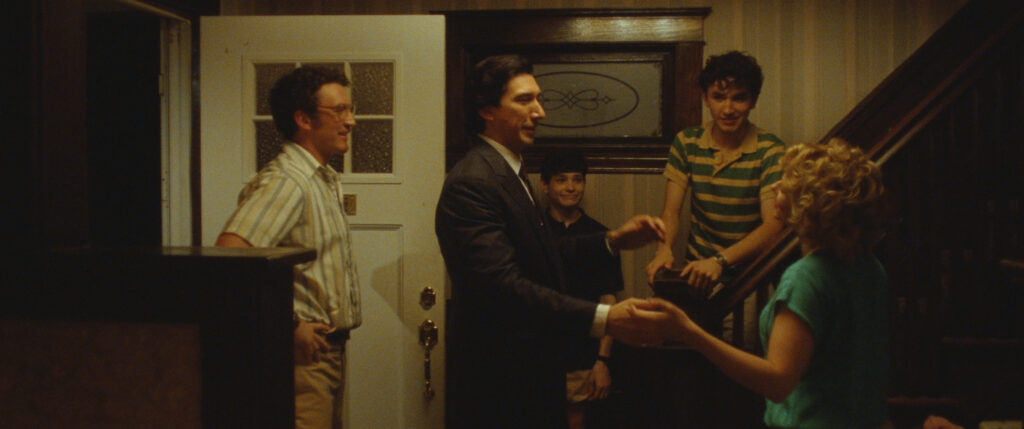
Gray initially might only spend a few moments in the introductory sequence of the film within the Pearl family home, but one thing becomes apparent: This is a home filled with love and care amongst the entire family. More importantly, it’s firmly rooted in the greatest place on Earth: Queens, New York. Even the potential mention of moving out to Great Neck causes Irwin (Miles Teller) to practically revolt with frustrated disbelief. To him, all those Long Island residents were either “born with a silver spoon or stole one.” In conjunction with the prior scene that sees him waking up his children early to help install storm windows, Irwin is a man unafraid to get his hands dirty when it comes to honest work. One gets the sense that he can perhaps be a bit stuffy, but that demeanor sheds away in an instant upon hearing from his brother Gary (Adam Driver). With little warning, Gary tells Irwin to prepare the family and table: he’s coming over for dinner, and he’s taking care of the food. It’s no surprise that Irwin’s stresses and more rigid personality can melt away so rapidly when interacting with his brother. From the moment Gary is on screen, it’s hard to not be swept up in Driver’s spectacular charisma. He’s having so much fun performing the role of the fun and mysterious uncle. Yet Gray still provides one of our very best actors plenty of runway to be his typically imposing self when the film calls for it. This is all to say that the electricity Driver has been bringing to films for years at this point is perfectly utilized in Paper Tiger. Much like Irwin, the audience needs to also be quickly drawn into the world of crime that this film is exploring, and Gary’s smooth-talking charisma is the guiding force.
The set-up of the film is dictated outright to Irwin as a sharp mind with an engineering background. The Gowanus Canal, one of the most polluted bodies of water imaginable, was being prepared for a massive clean-up operation during the time in which this film takes place. There’s a bitter irony to Paper Tiger that begins right here, where Irwin lives in the blissful naivete of his good-natured, working class mindset. That he can’t see the countless warning signs despite being involved in the shady risk assessment project brought to his home by Gary is a deadly two-pronged fault. Firstly, it speaks to his inability, or perhaps unwillingness, to see the literal muck in front of him for what it really is. Secondly, it indicates that Irwin is deeply loyal, perhaps to a fault, as Gray allows the remainder of the narrative to play out. Importantly for the film, it’s never frustrating in the sense that an audience can’t align themselves with Irwin. It instead allows Paper Tiger to operate as a dynamic crime thriller; specifically one that has several immensely gripping set-pieces which are liable to suck all the oxygen out of a room. It’s impeccable filmmaking on Gray’s part, and a knockout display of tension building in both scenario-building and character work. Each performer locks in on exactly what the film is asking of them at any given moment. Rarely has Teller or Scarlett Johansson, both of whom are often great in equal measure, ever been so excellent on screen before.

And so, as the Pearl family finds themselves deeply in over their heads, this immensely stressful situation treks across boroughs, from Howard Beach to Brighton Beach, making it as much a family affair as it is a city affair. What effectively follows for Irwin is profound psychological torture, designed to bring the ruin of regret into his once decently comfortable life. How Gray simply captures this effect on a person is bone-chilling and tragic. Irwin’s experiences have shaken him wholeheartedly, and as such, Gray begins to expand the cracks forming in lifelong bonds of brotherhood, matrimony, and entire systems of justice and beliefs. Gray reveals the devastating effects of closing our inner selves off to those we should trust most in the world. In doing so, we allow calamitous ruin to fall on ourselves and the only genuine strength we seem to have as humans; inner resolve. While discussing his initial vision for the film, Gray explained that he wanted to depict “how difficult it is to love somebody, and how things get in the way” of such love. In the case of Paper Tiger, an escalating series of “noxious side effects” take the form of crime, life-altering news, and an outright refusal to give oneself over to faith and essential trust. It makes for an obviously entertaining thrill ride as we desperately imagine how the Pearl brothers will escape their increasingly tense predicament. But the family drama grounding this entire tale is what allows it to soar as a stellar film in its own unique way. Beyond being a really well-made crime thriller, Paper Tiger is a crushing drama that shows how easily every aspect of our lives can become infectiously polluted if we fail to tightly grip onto the bonds which tether us to something potent and beautiful: the family we surround ourselves with through it all.
Paper Tiger celebrated its North American Premiere as the Opening Night film of the 64th New York Film Festival.