
Jacqueline Lentzou’s A Day in the Life of Jo: Chapter Phaedra begins with an ephemeral moment of the titular 15-year-old napping amidst the beauty of nature. She is conducting breathing exercises while laying in the grass, only to have found herself dozing off. Who could blame her? Lentzou’s breathtaking 16mm photography captures Greece at its very best: bright warmth, bursting with life, and a serenity that is borderline unmatched. And yet, in some ways the path this film takes over the course of 90 minutes couldn’t be anything further from those traits. But before jumping too far ahead, it’s important to note that Lentzou braces her audience for her wildly experimental coming-of-age film by immediately providing an initial shock to the senses. As we take in the scenery which Jo (Evita Andriopoulou) dozed off in, the film itself appears to roll out, yet the audio still persists. Her deep, rhythmic breathing lulls the audience into a trance, before subtitles of an unheard voice indicate Jo, and the viewer, are seemingly not alone. Lentzou has translated the anything-but-simple notion that Jo is dreaming, and her audience is now experiencing that dream state firsthand. Made up of abstract colors, shapes, and symbols of real-world items, Lentzou has effortlessly pulled her audience into something fantastical. But perhaps the most wondrous aspect of A Day in the Life of Jo: Chapter Phaedra is how Lentzou aims to point out that the fantastical and reality don’t have to be so definitively separated from one another.
We may have been initially pulled away from reality when the film rolled out and were brought to Jo’s dreams, yet the entire time we can still hear her breathing. It has a grounding effect on the viewer. Lentzou wants her audience to accept that this is all happening, even if it’s not physically tangible. It’s the sort of sentiment which Lentzou expands upon over the course of her film. There are ethereal realizations that can occur in the most unexpected moments. It’s one of the more beautiful aspects of life; accepting the potential to be radically altered as individuals through merely living life fully with curiosity and acceptance. Take, for example, the moment when Jo is sitting in class observing Phaedra (Anastasia Gouliamou) being nervously indecisive about which song to sing in front of the entire class. Phaedra is a fellow classmate Jo has never really thought much about, but that’s all about to change. It’s a beautiful performance from Gouliamou, as it embodies the enchanting qualities necessary for the spark of change that follows in Jo to feel earned. Captured in this moment dedicated entirely to a song Jo has never heard before is the beautiful notion of how effortlessly and unexpectedly we could be caught off guard by something extraordinary. Such beauty exists all around us, and our frustrations and stresses can effectively put up blinders that hide these kernels of wonder just waiting to be discovered in nature. On her way to school a scene earlier, Jo expressed how she likes to take it easy in life. Hearing this song sung so profoundly is lovely, but it’s perhaps also a bit frightening for Jo. If Phaedra is so dedicated to her craft and artistry, what if Jo has wasted precious time not feeling more committed to something beyond just taking it easy?
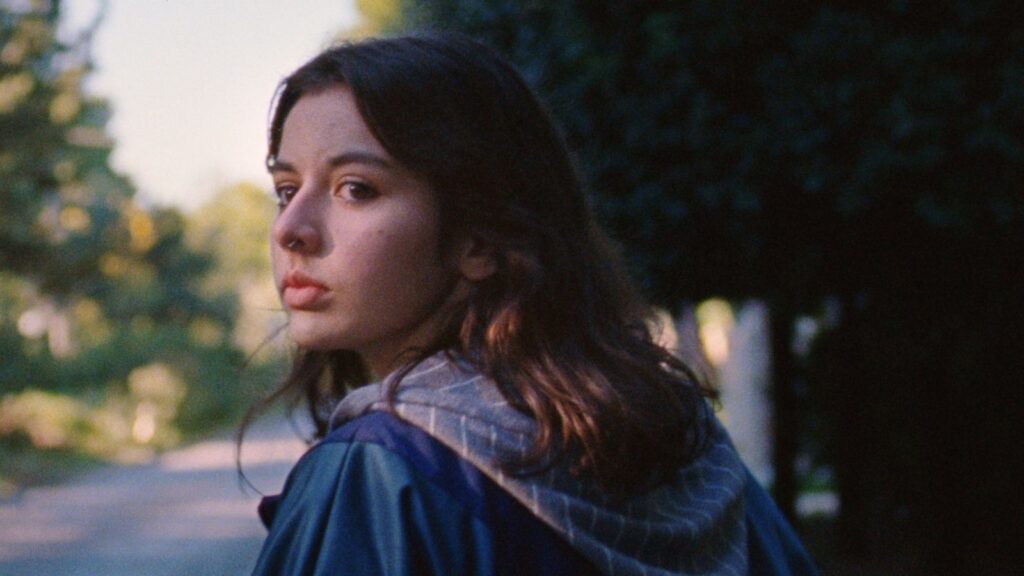
Of course, this being merely a day in the life of Jo means we don’t fully get to experience any sort of radical change in the 15-year-old girl. These things do take time after all. But there is a noticeable shift in Jo’s demeanor moving forward. For example, she begins to show a bit more curiosity towards her place within her surrounding environment. Through varied methods of stunning in-camera effects and direction, Lentzou captures such evocative imagery which distills the wonders and depths of self-exploration. They’re cinematic techniques which have this amazing ability to convey truly poignant moments of human connection, or in some cases, detachment. With Andriopoulou delivering a truly lovely performance, Jo is such a wonder to spend time with. To watch her explore quiet moments with her inner self is deeply revealing: moments such as Jo gazing at her own reflection shifting over and over through brilliant camera panning or the aforementioned moment of Phaedra singing bringing Jo to tears. It’s a realistic expression of self-actualization handled very carefully by Lentzou. And just when the film begins to really lull its audience into a space of comfort and joy spending a whole day with Jo, a truly sudden shock turns the third act into something completely unexpected, yet so unbelievably exciting from a pure filmmaking perspective.
It feels important to preserve the sanctity of what actually happens in the film, so that won’t be directly discussed in this piece. However, it feels critical to really address just how radically this film shifts into a different register entirely. Lentzou noted during a Q&A that she is interested in the absence of things. For a film so full of life and style, it’s a fascinating claim, but ultimately indicative of how much of the familiar is then removed from the final 30 minutes of this film. It’s particularly interesting to think about the emotional presence something (or someone) can hold, even in a state of absence. And as spaces within ourselves that were once absent then become filled, we see how these replacing bodies can make us feel more whole as individuals. We are constantly searching, even if subconsciously, for the symbols which will ultimately bring us to a place of comfort and fulfillment. One sequence in particular comes to mind featuring Jo’s father, who is largely absent from her life after the divorce of her parents. Jo clearly has conflicted feelings about her father: he may not be present, but he obviously holds space in Jo’s life mentally and emotionally. And out of nowhere, Lentzou quite literally snaps him out of existence. Her direction in this film becomes more and more literal as the film goes on. And it’s a magic trick which becomes dazzlingly reframed in the third act of this story. All the experimental asides of A Day in the Life of Jo: Chapter Phaedra take on a new, beautiful context: a direct acknowledgement of ethereal beauty to be found in reality and nature itself, existing all around us at any given moment.
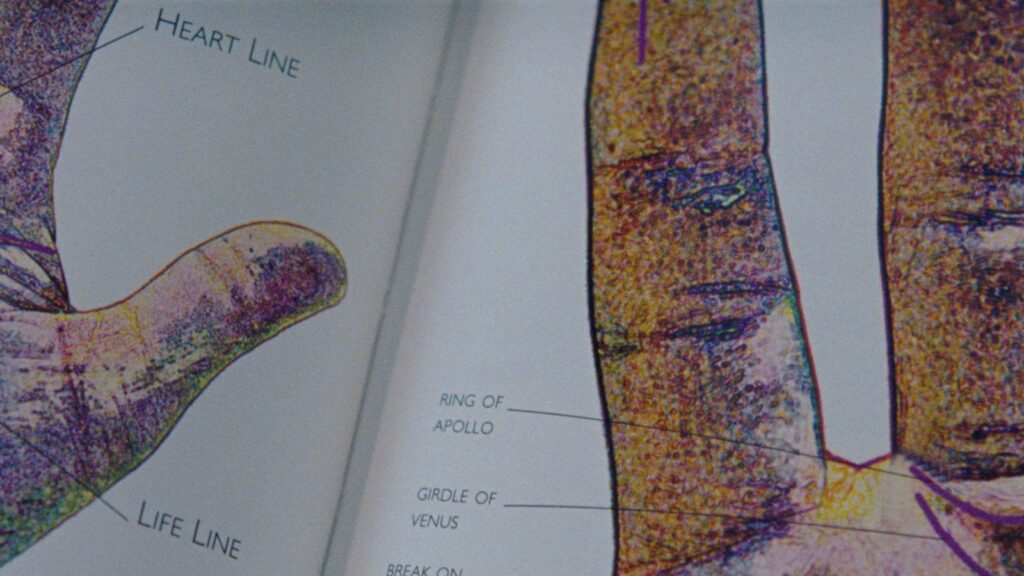
How do symbols affect us, and how do we recognize them? These key questions feel like they exist at the core of A Day in the Life of Jo: Chapter Phaedra. Lentzou puts that inquiry to the test by directly posing it to her audience through the major swing she takes in this film. Frankly, a decision as bold as this one should be majorly applauded. It not only reveals a great confidence and talent in Lentzou, but a genuine willingness to explore the boundaries of lofty ideas without worry of alienation. As she delves deeper into grand ideas about life, emotional and spiritual connections, and even cinema itself, these experimental methods of filmmaking come together to form something uniquely great and quite moving. It’s an incredible example of style equaling substance within the context of a film. And ultimately, the film ends on a note so emotionally resonant it feels almost miraculous in its simple ability to carve out something so beautiful in an experience that could just as easily be described as haunted. Lentzou seems to accept the contradictory elements of humanity, reality and everything else, and then bends them to her will in order to mine for something that is both personal and deeply affecting.
A Day in the Life of Jo: Chapter Phaedra is celebrating its North American Premiere in the Currents section at the 64th New York Film Festival.