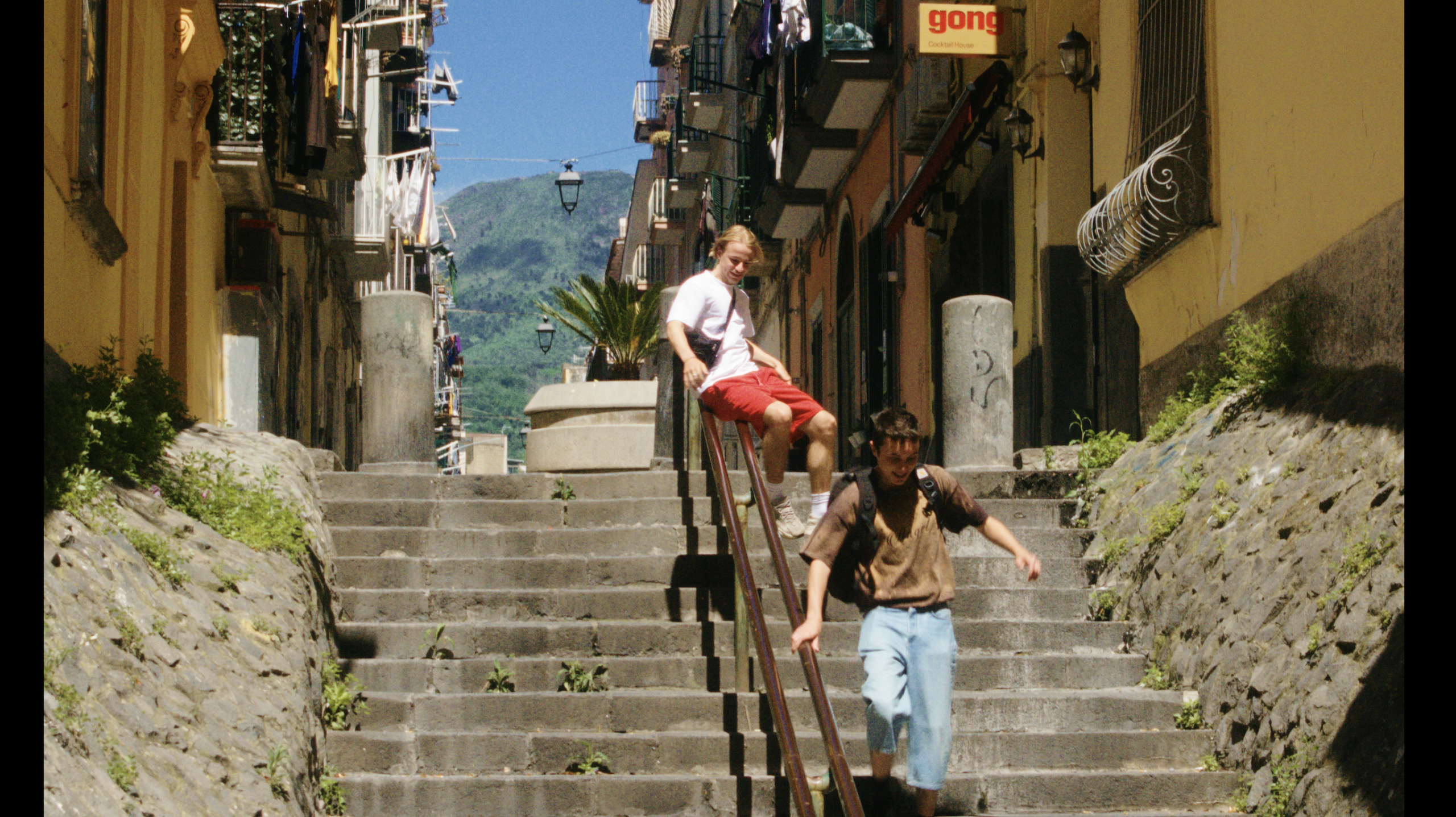
Marine Atlan’s La Gradiva begins in a way that evokes the potential for a grand, fantastical journey that’s about to play out. The music begins to swell as a camera mounted to a train bursts forth from a dark tunnel, moving ever so fast through the countryside. The rich landscape looks incredible, but despite the beauty surrounding the train passengers, it’s all zipping by as a blur. Such a metaphor for the ways in which life slips by and moves so quickly ever onwards is deeply fitting for Atlan’s coming-of-age collage. A bulk of the passengers on this train are French high school students headed to Naples for what could potentially be the trip of a lifetime. It’s the sort of experience one might look back on as an adult in bewilderment at how circumstances could have ever led to such an exciting time. But as is the case for countless teenagers, such a stimulating situation could be utterly lost on them. For others, they couldn’t be more ready for what the trip has to offer; although they dread the inevitable close-together confinement with select rowdy individuals that a trip like this guarantees. And to even begin to think about the levels of stress the two chaperoning teachers must be feeling seems akin to an exercise in driving oneself insane. That’s all to say that the trip portrayed in La Gradiva offers limitless potential for those who merely give themselves over to it wholeheartedly. It will have so much to offer them, but each student must be willing to open themselves up to the world around them. This will become a key theme in La Gradiva, as the students are there to learn all about history and the arts.
Of course, as entrancing as this trip appears to be for the audience, a few of the students have much more essential issues to be dealing with. Pompeii and marble statues feel a bit less grand and essential to the students when they have other things on their mind: checking Grindr, stressing out over a crush ghosting them, crafting the perfect retort, or anxiously awaiting a college acceptance email. Some say that youth is wasted on the young, but Atlan seems to disagree based on this film. It would appear her belief is much more hopeful with regards to the kids being alright. For all their frustrating tendencies and tunnel-vision views of their place within the world, Atlan instead cinematically captures this group of students as a collage of sorts. Each one is completely distinct as their own person, and so, each one views the world as a completely different experience to be had. It’s part of what makes La Gradiva so strikingly rich; at any given moment, Atlan could rest assured knowing wherever her camera is pointed next, the audience is bound to feel the emotional effects of this rich screenplay.
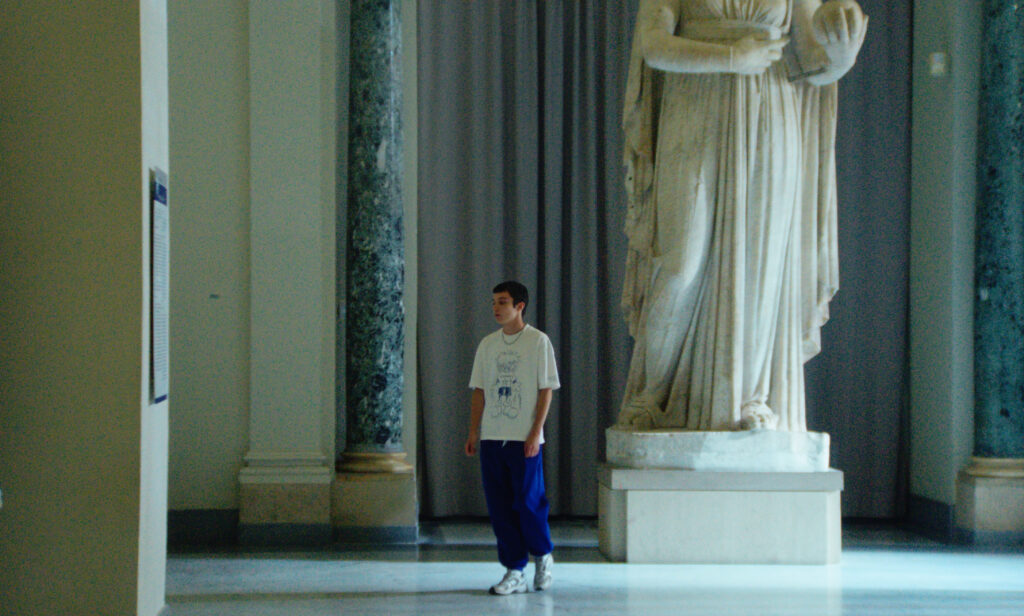
What’s most critical about La Gradiva is that Atlan never judges these characters, even when they’re being the antithesis of pleasant. Take Toni (Colas Quignard) or James (Mitia Capellier-Audat) as two perfect examples. They’re the typical duo everybody remembers from their days in school. They always move in tandem, causing a ruckus through vocal disruptions or a refusal to engage with any schoolwork whatsoever in a genuine manner. For James, his character seems to feel as if he’s above all the “meaningless” work assigned to him. Still, he gets it done and has the grades to allow for a bit of leniency. Toni appears to be fully checked out on the other hand. He postures for both students and teachers alike, and seems directionless and unmoored, pulled in whatever direction the wind takes him. In some instances, it can lead to really funny moments. But more often than not, these reveal something much more sad about his character. He’s just completely out of his depth, and his more displeasing affects make it so that very few people have the desire to really put in the work and help him in a meaningful way. In the case of these characters and the entire ensemble, the performances are remarkable in that each respective student feels completely capable of carrying their own film. They carry themselves in such a way wherein it feels as if whole universes are contained within them; they simply don’t have the means to fully explore and express themselves as they’d like. Touchingly, Atlan gives them various attempts to unlock these forms of thinking and exploration through the teachings and opportunities Madame Mercier (Antonia Buresi) has to offer.
Even so, for all Mercier’s lofty and wonderful ideas about connecting to art emotionally and viewing the present through the lens of history, Atlan still frames her as an individual with her own flaws and frustrations. She’s simply trying her best in an impossibly stressful situation. Understandably, there’s going to be moments of exasperation or inappropriate comments shouted a moment of lashing out. But her character is a particularly refreshing take on the “wise adult” archetype which many stories set amongst the relationship between students and teachers contain. It makes her feel more human. It makes the film feel all the more realistic and honest about life. It’s one of many examples of Atlan’s strong character work, which this film nails to an extraordinary degree.
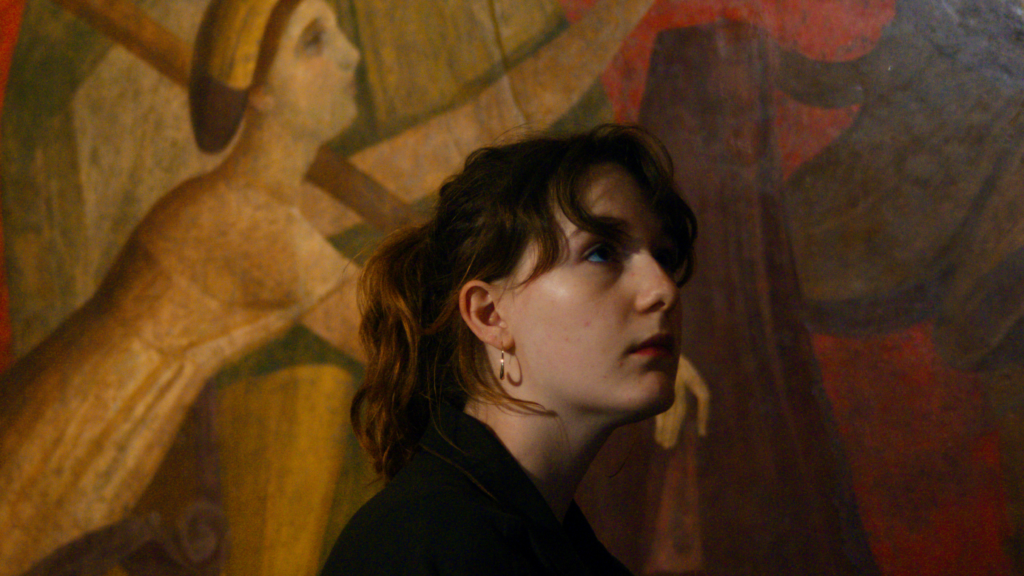
There’s no denying that a fair amount of the behavior depicted in this film ranges from unpleasant to cruel. But then again, since when have characteristics such as those ever been limited solely to teenagers? What Atlan captures throughout La Gradiva is a genuine youthful naivete that leads to that rude, ignorant behavior. But it’s important to note that while Atlan may capture that element of youth well, and without judgment, that doesn’t mean she grants them total forgiveness either. There’s always a counterbalance at play. And this counterbalance is rendered quite effectively. Take the quiet Suzanne (Suzanne Gerin) as an example. For large swaths of the film, she remains distinctly on the outskirts of the action. Her frustrations are immediately endearing because they’re wholly relatable and quite devastating when hearing them spoken out loud, potentially for the first time. Her subsequent responses and actions in the film build to the point of being worthy of applause and cheers. Much like how they refer to Naples as “beautiful but chaotic,” these children too can be described as such. As these children discuss their own personal struggles, political thoughts, and raw emotions, they remain as entertaining as they are endearing. It’s what makes the finale of this film all the more gut-wrenching and earned.
During a tour of a Pompeii exhibit, Madame Mercier points out one of the most famous plaster casts known as “The Pregnant Woman.” She notes how this is but one of many pieces of history which have had stories and interpretations imbued onto them for hundreds of years. With La Gradiva, one can’t help but think about how Atlan is sort of doing the same thing: writing and capturing a generation of children’s fears and worries, excitements and thrills, failures and triumphs, into a crystallized piece of art to be reflected on for generations to come. Can the human condition be boiled down to the mere necessity of placing meaning onto distinct moments in time that remain unknowable? Certain events can occur that, especially when young, completely shatter any semblance of reality or belief that life revolves around the individual. How Atlan conveys this in the film is deeply effective and cuts to the very heart of La Gradiva in one fell swoop. To attempt to make sense of life and all its history is to accept that the romanticized stories we tell ourselves hide truths which are often much more rotten and indicative of humanity’s honest history. These may be things that we cannot fully, or are unwilling to, comprehend. But La Gradiva does a particularly stellar job at romanticizing the beauty of the world while never shying away from the pain that exists among it. It’s a powerful film that also happens to be crafted with such clear, stellar talent.
La Gradiva is celebrating its U.S. Premiere in the Main Slate section at the 64th New York Film Festival.