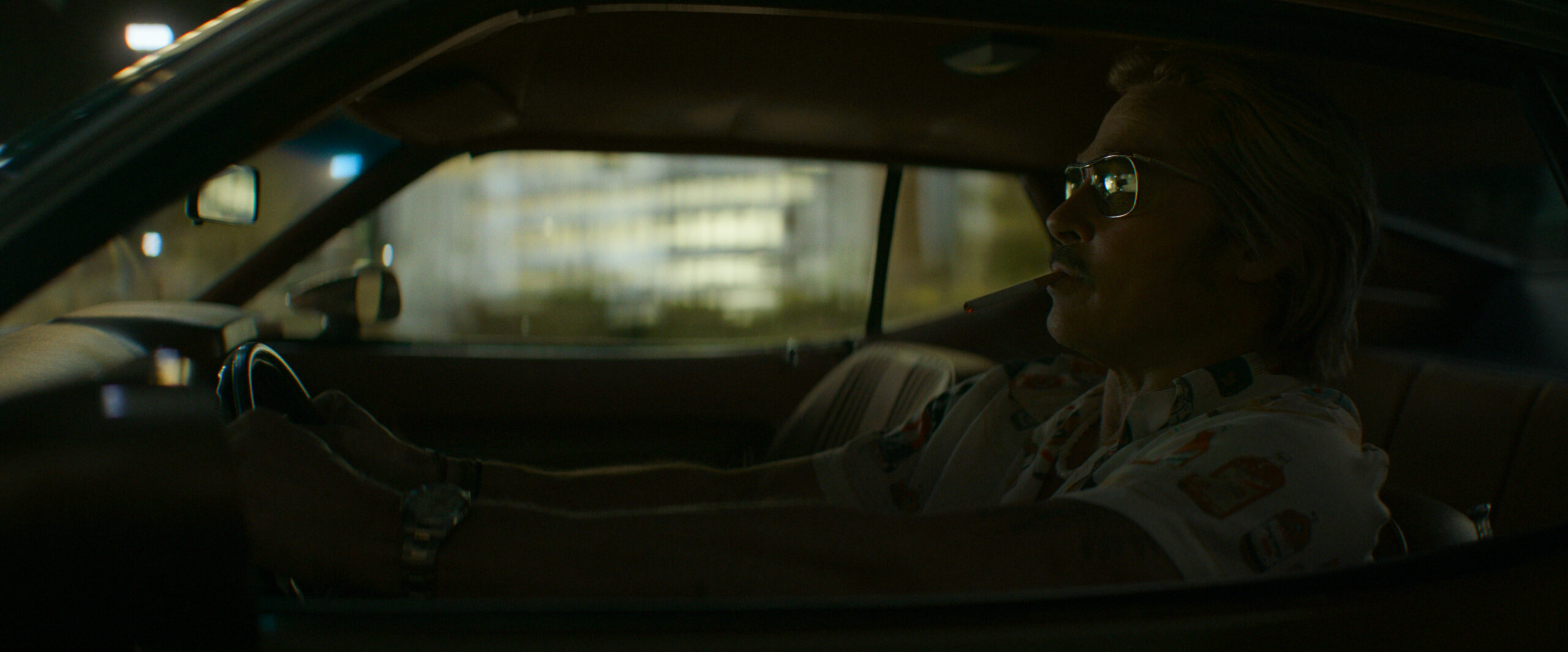
When a Quentin Tarantino-written sequel to Once Upon A Time in Hollywood was announced, the sheer shock of the notion made this potential film a curiosity at the very least. That the sequel was then reported to be directed by David Fincher made it even more fascinating of a cinematic object. The time is nearly upon audiences to witness what such a bold and shocking project like this film could feel like. Ultimately, that The Further Mis-Adventures of Cliff Booth is soon going to be available in IMAX, and eventually on Netflix, in its present form is one of the most baffling yet thrilling prospects for cinema as a whole this year. Audiences everywhere are being given a truly strange gift in the form of this project. To pull a page from the famously cool Cliff Booth (Brad Pitt, reappraising his Oscar-winning role), who is often quite blunt when it comes to being a wordsmith, this film feels certifiably insane for a multitude of reasons. Although such a claim shouldn’t scare off any potential viewers; it should instead hopefully drive audiences in flocks to catch this film on the big screen. It’s an experience that needs to be seen to be believed, if only because of how much it simultaneously feels like an exercise in indulgence while also functioning as a major mockery towards all those who aestheticize the history and legend of Hollywood as a place of iconography rather than just another place that has its own set of storied streets. And who can be considered a bigger culprit of this mythic pedestal building than Tarantino himself?
Firstly, it’s pretty easy to catch oneself forgetting just what it is they’re watching over the course of this film’s meandering runtime. This is a free-wheeling sequel very much in line with its predecessor. And much like Tarantino’s fantasy retelling of Hollywood history with his previous film, this sequel has an equal amount of shadows to contend with amidst all the glitz and glamour of the wild days of New Hollywood in 1977. To open the film with the Netflix logo steeped in faux film grain and grindhouse stylings is more than enough to settle audience expectations into what sort of adventures will be depicted in this film. While the film and its setting may seem a bit incongruous with the release method and the digital-forward aesthetic and technologies utilized, such a shot being called is made in good faith by the filmmakers. It also functions as the first of many winks at the audience. This opening feels like the perfect way to start a film bringing together two iconic filmmakers of the 90s whose styles couldn’t be further apart on the cinematic spectrum. Beyond the comparable cinematic master talents each of them possesses, the contrasted pairing of Fincher’s and Tarantino’s styles understandably baffled many upon announcement. It’s part of what makes the film’s existence so bewildering in the first place. And yet, something about it works inherently well when examining the material at hand.
Now, Fincher might be most beloved by cinephiles everywhere as the grim and brooding director known for his exacting vision. But he occasionally has plenty of fun in his films. There’s examples peppered all across his filmography, though it’s perhaps most indicative in his previous film, 2023’s masterful The Killer. That film is ultimately a grand exercise in sardonic humor which culminates in one grand punchline. Still, Fincher has never been as loose as he is when taking on The Further Mis-Adventures of Cliff Booth. It seems fair to assume that one must sacrifice some rigidity when working off a Tarantino script. And in that regard, the filmmaker currently in limbo as he prepares his 10th (and supposedly final) film, has delivered exactly what his fans have come to expect from him after all these years. He is a filmmaker rightfully associated with complete excess. His penchant for detailing the minutiae of classic TV tropes, movie star archetypes of a Hollywood long gone, and reveling in a bevy of cinematic styles that were left in the past is as present as ever. Can it be a bit grating at times to hear Tarantino himself wax poetic about his fictional television stars in extended interstitial cutaways? Perhaps. But there is something largely endearing about witnessing an artist who loves Hollywood and movies so much that he’s committed himself to such lunatic exercises of inventing fiction purely for the sake of creative writing endeavors. As we are brought into a virtually empty New Beverly Cinema in 1977, we see how it is still run like a well-oiled machine by Cliff. As he moves from the projectionist booth to behind the screen or the concessions counter, it’s evident that nobody involved on the filmmaking team has lost a step. Audiences will gladly fall back into the comfortable space that this film and its predecessor has to offer. But The Further Mis-Adventures of Cliff Booth isn’t just a joy-filled trip down memory lane. It’s instead a film with a much seedier viewpoint on the checkered past of Hollywood and its icons.
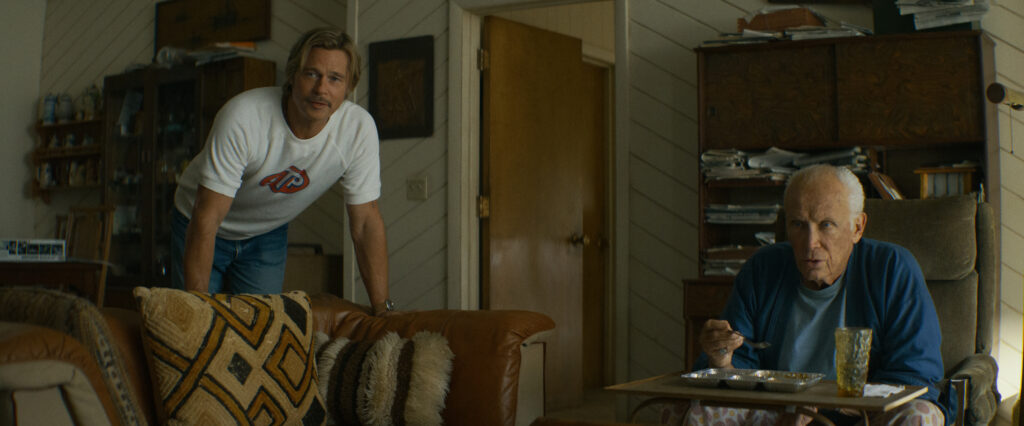
Cliff might have last been seen altering the course of Hollywood forever, but it’s a town that moves on quickly in search of the next great story or star. And so, despite Cliff’s comically cheerful demeanor and lovely roommate relationship with his father (an outstanding Peter Weller), he seems to be slumming it through life. He’s shroomed up, burnt out on various odd jobs, but still carries himself like a king of Hollywood. Importantly, he understands that he’s merely a piece of fabric in the grand tapestry of Hollywood history. He lives life his way, all in service of the bigger picture and chasing a sense of peace. It’s perhaps the most interesting angle explored in The Further Mis-Adventures of Cliff Booth: the baked-in darkness of both Cliff and Hollywood. For Cliff, he is a veteran of gruesome war and has his fair share of personal horrors to grapple with upon returning home. And Hollywood, as well as all its surrounding neighborhoods, is a place where dreams (and nightmares) form and occur often. This film smartly captures just how much darkness is brewing within both character and setting. There’s no sugarcoating just how much violence and frightening lore is being withheld by the coolness of Cliff amidst the dream factory of making movies and television for a living. To be surrounded by the brightness of the stars is a way to keep the darkness at bay. All these extraneous activities of Cliff’s can be seen as a form of distraction. Cliff merely exists within these stories of legend, but he much more prefers complete structure and control as opposed to losing any sense of who he is as an individual person attempting to dictate his own story.
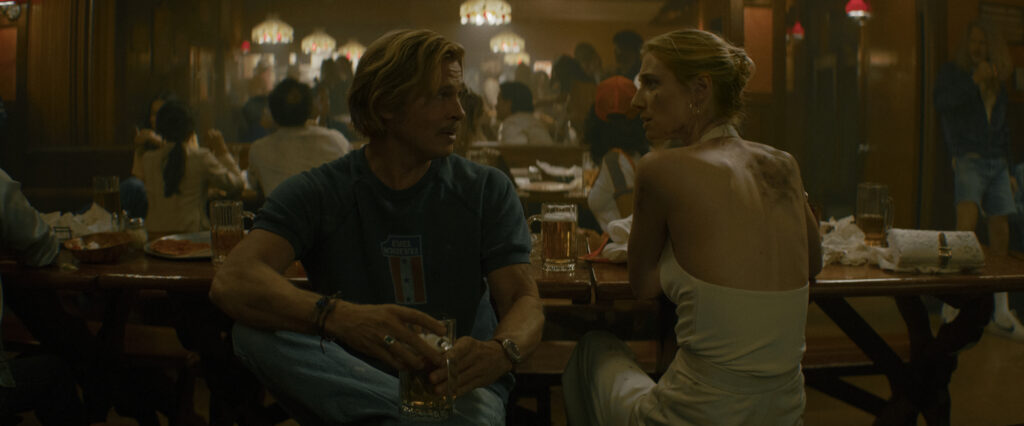
Even still, there are whole worlds beyond Hollywood. Cliff is our shepherd through it all. That such a place as Hollywood, or its surrounding environs, exists in any capacity is truly an enigma. While cruising through the hills of the legendary Mulholland Drive, a character points out that the home addresses make no sense whatsoever. His partner merely points out “That’s Hollywood.” It’s a strange place, and Fincher and Tarantino both seem to be interrogating how a place like it could ever exist in the first place. As The Further Mis-Adventures of Cliff Booth takes the viewer all over Los Angeles, each location is grounded by its distance and direction from Hollywood. It is the central figure and force around which all other people and places orbit in the context of this film. Despite Hollywood being a place of potential across both ends of the spectrum of opportunity, from inherent beauty to cruel evil, the worlds beyond Hollywood each seemingly have their own way of operating. Cliff has an innate ability to work his way through all of them; after all, he’s been floating around this town for quite some time. Whereas somebody like Karen Crosby (a very fun, very tall Elizabeth Debicki) appears completely out of her depth in these spaces, Cliff moves through them with a maniacal laugh looking as cool as ever. The multitudes of Cliff are inherently representative of the multitudes of Hollywood. The stuntman has more than his fair share of demons and skeletons hidden away, but we instead easily find ourselves distracted by the wild stories and legends Hollywood has to offer. Before we know what’s happening, the meandering pace that has allowed the audience to hangout with these characters for so long is quickly cast aside. What instead follows is a breakneck third act that’s completely unhinged and arguably a bit abrupt in its wrap-up of the film. Still, despite its strange structure, it’s hard to not find oneself watching the film aghast with gleeful excitement and bewilderment at its action-packed climax. Tarantino takes the much-beloved insanity of the Once Upon A Time in Hollywood finale and Fincher imbues it with the energy of the all-timer “Brute” sequence from The Killer for perhaps the most deranged ending of the year in cinema. Audiences may be walking away quite puzzled, yet it feels impossible to deny the primal joys such madness conveys to its audience. Cliff is as cool as ever, and the period setting Hollywood looks dazzling. But the finale of The Further Mis-Adventures of Cliff Booth makes one thing abundantly clear: the facade can come down in an instant for something much more frightening and much more dangerous.
Netflix is releasing The Further Mis-Adventures of Cliff Booth in IMAX on November 25, 2026 and on Netflix December 23, 2026.