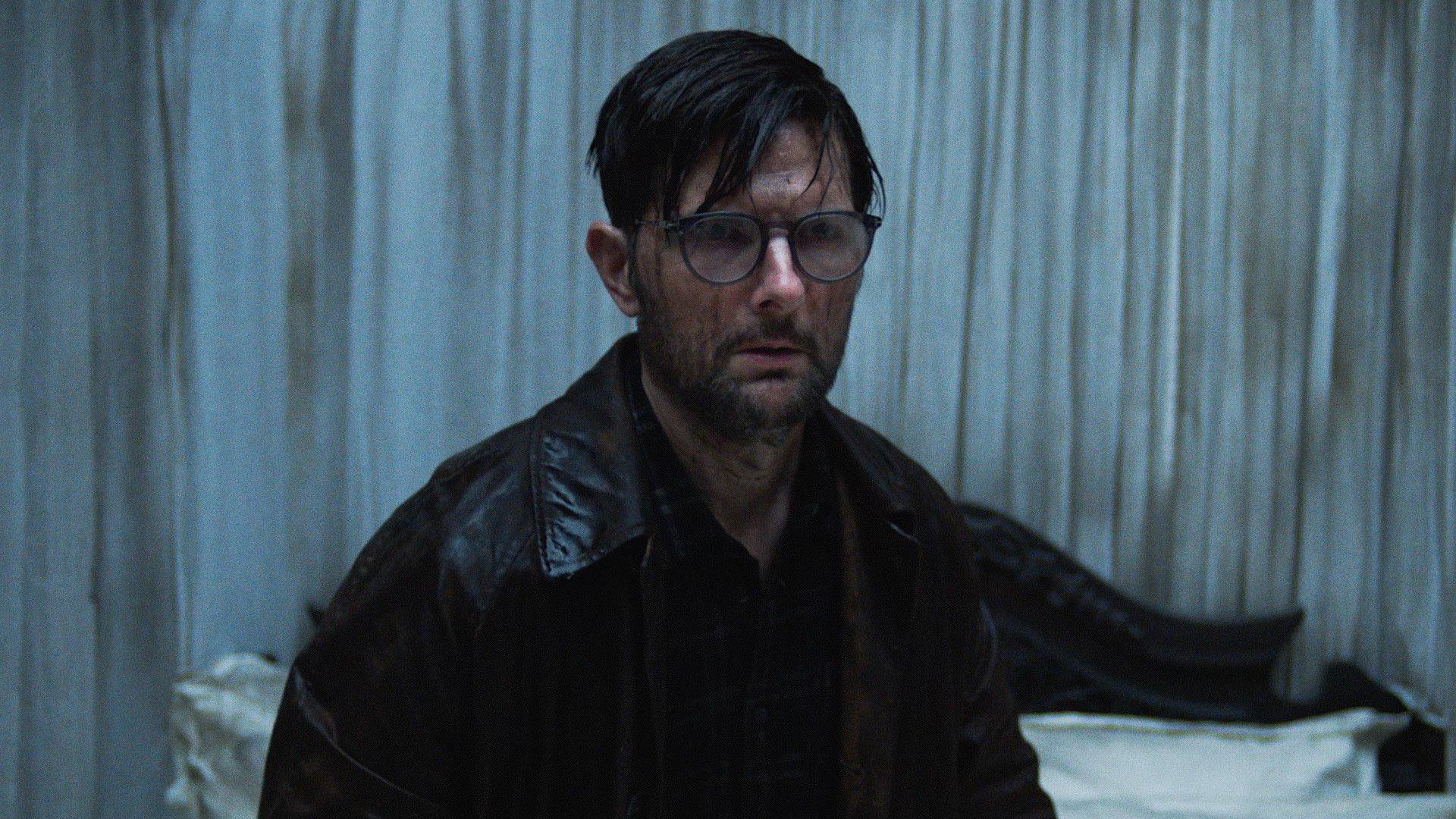
Damian McCarthy’s Oddity released in 2024, and its immediate shock to the senses for horror fans was such a treat. The Irish horror film firmly committed to its own sensibilities and rhythms to treat its audiences to something truly chilling. The scares were effective and well-earned, opting to lean on invoking a sense of foreboding dread and perfectly-staged production design over cheap scares so common in horror nowadays. There was a clear mythos that McCarthy relied on, and his blending of folk stories and iconography alongside classic horror sensibilities combined to form something genuinely frightening. His follow-up film, Hokum, shows no signs of slowing down on this front. In fact, McCarthy’s latest feels like such a distinct and exciting level up in every way, all the while retaining the magic which bolstered his previous film. It’s all made blatantly apparent from the very first frame of Hokum.
Whereas Oddity almost exclusively takes place in a wonderfully staged home in the countryside, Hokum opens on an unfathomably larger scale. It was a genuine shock that upended any potential expectations having gone into this film knowing practically nothing. But McCarthy very quickly brings his audience back to something a bit more familiar, as we cut to see Ohm Bauman (Adam Scott) sitting alone, writing in a dark, oversized home that is, once again, immaculately well-staged. It’s here that the scares begin occurring almost immediately. It’s a simple and effective retread of the style which makes up the bulk of Oddity. McCarthy could have clearly operated within this lane for longer, but his refusal to remain comfortable with familiarity means he upends this chilling introduction to bring his central character and audience to a much larger playground: an isolated hotel in the Irish countryside.
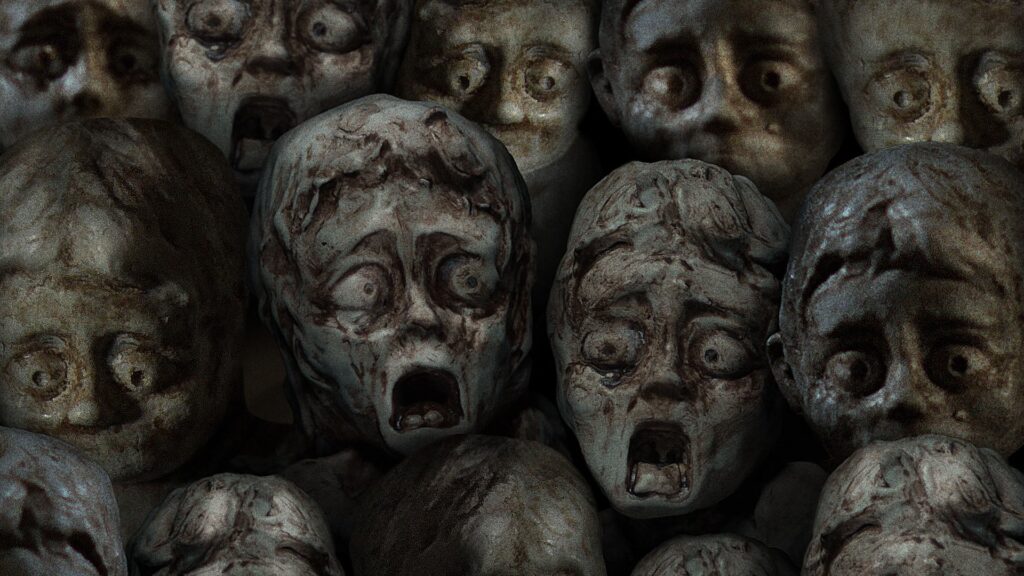
It’s only upon his arrival in Ireland, more than several minutes into the film, that we get any sense of Bauman as a character. And immediately, we’re treated to a hall-of-fame insufferable horror figure. While that may seem like an insult, it’s a testament both to Scott’s performance and McCarthy’s refusal to craft films that are easily definable. Between being a major star in Severance and beloved for his quirky charm on Parks and Recreation, Scott is channeling something much more akin to the sniveling rudeness of his character from Step Brothers. He’s essentially unlikable from the moment he opens his mouth, portraying the American in another country who can’t help but demean anything and everything around him. It’s legitimately shocking the lengths to which McCarthy is trying to radicalize his audience against the central character. But it’s all part of his master plan, and the first of many effective structural tricks that Hokum pulls off across its runtime. As Bauman meets, and largely dismisses, all the characters which inhabit the hotel and make up the rest of the cast, the audience will begin eagerly anticipating comeuppance. Surely spotlighting such a rude central character in a horror film means the runtime will be largely devoted to putting them through the wringer, right? Instead, McCarthy jolts his audience and flips the desired retribution on its head. What we instead see is shocking and deeply haunting, and McCarthy pulls no punches when depicting the hollowing pain of such a tragic sight.
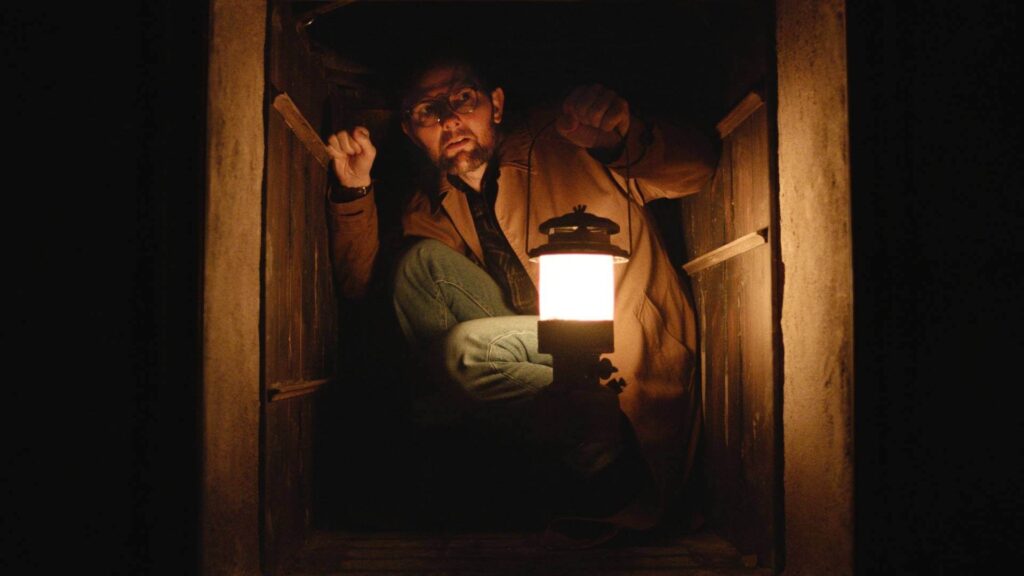
Shortly thereafter, Bauman does find himself completely trapped in the grips of a full-blown haunting. For basically the remainder of the runtime, McCarthy is given free reign to deliver one terrifying scare after another. McCarthy makes use of the jump scare again here similarly to how he utilized it in Oddity. The pace of these scares are much more patient than typically seen in horror, and the slow demeanor with which they’re executed speaks to a precise command of tone and understanding of fear. Obviously, a quick, well-utilized jump scare can work wonders; McCarthy effectively pulls it off a few times in this film. But he largely operates with the understanding that trying to make sense of a horrifying situation while it’s currently occurring isn’t just scary; it’s world-shattering. Bauman is repeatedly shown to be completely close-minded despite seemingly being a somewhat acclaimed writer beloved for his ever-expanding trilogy of books. So for all the times he writes off one of the horror stories he’s initially told as nonsense, his direct experiences with these haunting circumstances is a blow to his ego, his soul, and the entire foundation around which he has built up his cruel demeanor.
This is all to say that, throughout the middle chunk of this film, McCarthy systematically breaks down his character through old-fashioned scares that work absolute wonders. Hokum is haunting in every sense of the word. It’s a film that utilizes practical effects and understands the unseen is largely more terrifying than a CGI monster pulled from the imagination of a frightened individual. If it’s a tangible creation, that makes the audience feel as if it could genuinely haunt them upon leaving the theater. So the fear Hokum feeds off is one largely of the mind and what it conjures up because it can’t process or fathom what it can’t visualize. And this is doubly so as we come to learn more about Bauman. Largely confined to a single room, McCarthy appears to relish limiting the space within which he works before utilizing every square inch to his benefit. It makes for a wonderful exercise in limitations creating great results. There’s also a perverse joy as a genre fan in seeing what essentially amounts to a deeply scary escape room continue turning out delightfully frightening surprises. And if that wasn’t enough for the audience, McCarthy takes us out of this room during a key sequence to deliver an expertly taut thriller. It becomes abundantly clear with Hokum that McCarthy is going to become, if he already isn’t, a formidable filmmaker in the horror space. Like any great fairytale, a type of storytelling and motif McCarthy clearly admires, we enter this story expecting one thing and exit with something radically different. The magic trick of Hokum is how effortlessly, and effectively, it sends its audience out the door. Audiences may have initially wanted to see Bauman tortured by whatever horrors McCarthy cooked up in his latest film. But McCarthy instead allows his audience to walk away from this cautionary experience with something far more redemptive, moving, and enriching. It’s a genuine delight of a film, even if you’ll spend the entire rest of the evening looking over your shoulder with panicked glances.