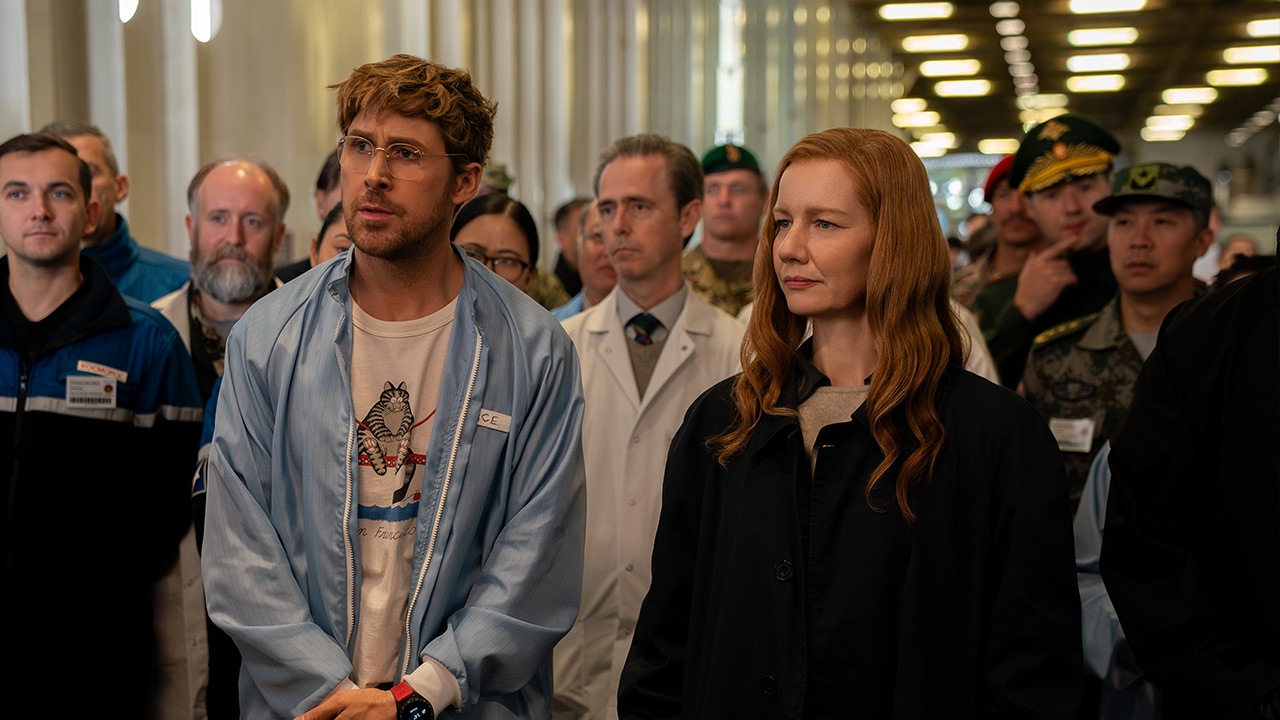
Phil Lord and Christopher Miller’s Project Hail Mary has burst onto the big screen, and it serves as a joyous example of what a blockbuster could, and should, feel like. Within any frame of this Greig Fraser-shot spectacle lies so much sci-fi goodness for your eyes to behold. And it’s in Drew Goddard’s screenplay, quite faithfully adapting Andy Weir’s novel, where practically every conceivable emotional beat is readily available to reverberate through your heart and soul. Although packing so much into its hefty runtime might muddy certain individual aspects of the film, and it largely removes a widely-appreciated aspect of the source material, it’s difficult to not find yourself won over by all the pleasurable aspects working in this film’s favor. Judging the fundamentals of Project Hail Mary on their individual levels does leave a bit to desire. But that’s not what cinema, and particularly pop-blockbuster cinema like this, ultimately feels about. And after all, this is a story entirely about how the sum of our parts can come together despite the flaws we see within ourselves to achieve something truly spectacular. So importantly, beyond recognizing this film for its quality of adaptation or category-specific qualifiers, it could be argued that Project Hail Mary achieves its ultimate goals; goals which are revealed over the course of the film through complementary ideas.
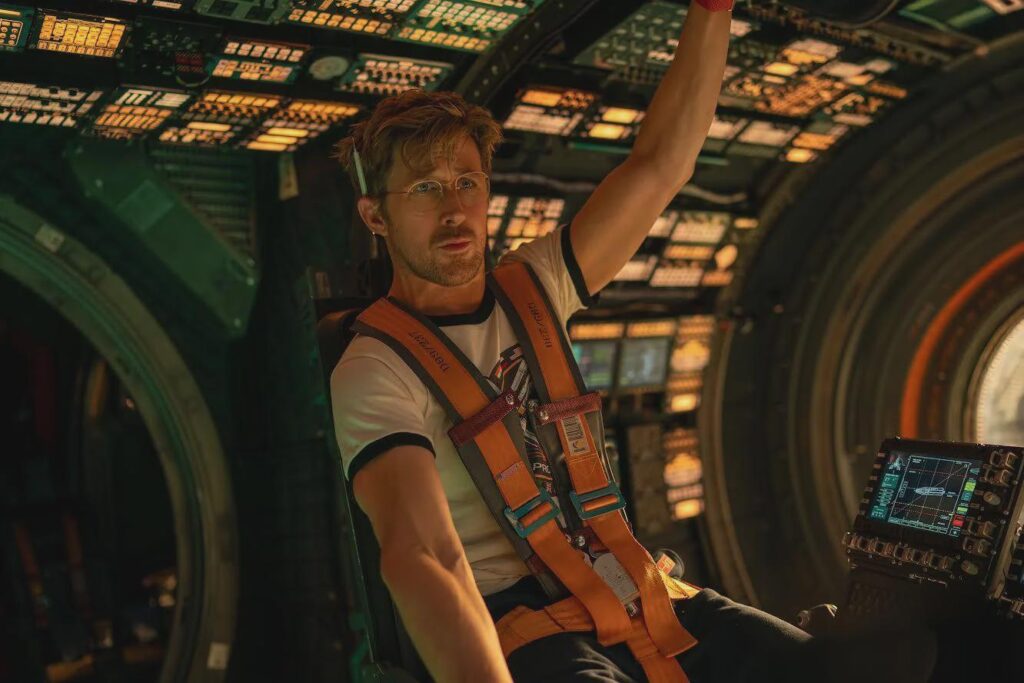
It’s immediately apparent that putting Ryan Gosling into space makes for a wonderful cinematic experience. As Ryland Grace (Gosling) awakens completely perplexed as to his whereabouts on a massive spaceship, the audience is instantly treated to both intrigue and comedy in equal measure. With a full head of shaggy hair and an even more unkempt beard, Gosling pratfalls and contorts his sleeping bag-encased body around the room in an attempt to begin making sense of his current predicament. It’s effortlessly funny thanks to Gosling, operating like the full-blown movie star we’ve always known him to be. It’s a wondrous introduction that makes good on its promise. One of the most captivating elements across all of Project Hail Mary is just how much this feels like Gosling’s show. He’s always been a gifted performer, beloved for his charisma, his swagger, and his constant penchant for allowing himself to be the butt of the joke in any given scene. That’s all still present here, alongside his endearing vulnerability and the necessary gravitas to ground this big-budget spectacle set in the far reaches of space. But for large swaths of the film, Gosling isn’t performing against another top-tier performer like Emma Stone, Margot Robbie or Harrison Ford; his scene partners live on an absurdly stacked list that could honestly go on and on. This film instead sees Gosling largely playing against the debut performance of an Eridian alien named Rocky (David Ortiz as the voice and lead puppeteer), or sometimes even nothing at all. And thanks to the magic of cinema, it all feels wholly believable.
Rocky’s presence in Project Hail Mary represents quite the shock in both the novel and the film. Although utilized heavily in the film marketing, Rocky’s appearance in act one completely shifts the energies of both the audience and Gosling’s performance. Impressively, there’s never a moment of Rocky appearing on screen that you don’t fully buy into his tangible nature. It allows the film to further ground itself, and the immensely great creature design and puppeteering give Gosling so much to naturally play off of. It’s here that Project Hail Mary becomes a two-hander comedy, all the while deftly balancing the immense stakes of the mission at hand. These stakes are partially discovered piecemeal through widescreen-shot flashbacks to Earth, where Gosling can bounce off the wonderful Sandra Hüller, a very fun Lionel Boyce, and an always great Ken Leung. But aside from these flashbacks fleshing out more of Grace’s character and the scenario itself, Rocky and Grace’s relationship solidifying in the beautiful vistas of 1.43 IMAX-shot outer space makes up the bulk of the runtime. That alone is more than enough to be worth the price of admission. Anything outside of their interactions can be seen as a bonus in all honesty. And it’s around their banter and process-driven motivations that Lord, Miller, and Goddard find an impactful hook to impart their ode to the arts, specifically cinema, and the mark it leaves on us.
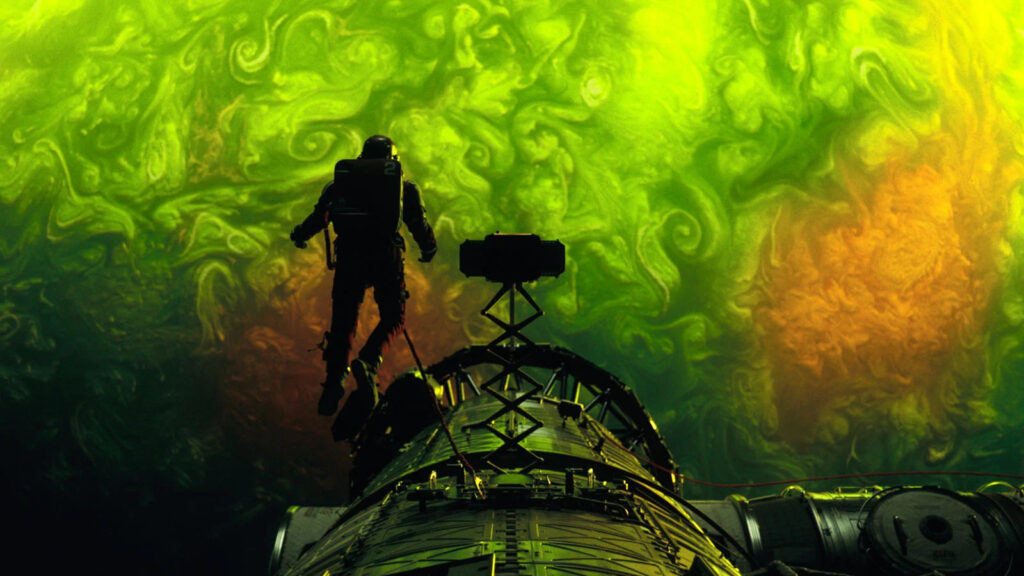
There’s a reason Lord and Miller continuously invoke direct imagery, motifs, and ideas present across countless cinematic classics throughout Project Hail Mary. Grace directly references Close Encounters of the Third Kind in a cheeky comedic moment. One stunning shot feels directly pulled from 2001: A Space Odyssey, down to the color palette. It’s obviously difficult to avoid inspiration from such totemic pieces of cinema. And even the most minor mention of such masterful films is a risky gambit while trying to craft your own distinct entry into the genre. But these links feel incredibly pointed on the filmmakers’ part. And one link in particular arrives during a breathtaking sequence that doubles down on the entire notion of Project Hail Mary to begin with. Without delving into the specifics, Grace is self-proclaimedly “having a moment” while witnessing the beauty present amidst the chaos he has found himself literally surrounded by. It’s a stellar sequence that Lord and Miller wonderfully pull off. And amidst these impressive visuals, one can’t help but think about the reason why any of us would strike out on a quest for redemption and perseverance in the first place. It’s in our very nature to move forward. In doing so, we often forget to stop and recognize where we are and just how far we’ve come. These references to the past indicate the idea that the past informs our future whether we’d like it to or not. There’s no denying it. And it’s through these immensely collaborative moments across history that allow new moments to be crystallized and be born anew. Whether Project Hail Mary ends up amongst the pantheon of sci-fi classics is yet to be seen. But its gusto and its willingness to be so referential and reverential, all while retaining its own distinct, individual qualities, is exciting to witness in its most transcendent moments. And it also serves as a reminder that the lineage of our explorations, our discoveries, and our triumphs, all inform what we’re fighting for; the hope of adding to such legacies and “having more moments.”
Unfortunately, Project Hail Mary isn’t solely made up of these moments maintaining its greatest strengths. While several of those sequences play out in extended form, this film feels like quite the truncated version of its source material. It’s rarely feasible for a film to include every single characteristic of whatever it might be adapting. And that’s not necessarily the issue with this film. But in the case of this particular adaptation, Weir’s integration of hard mathematics and science in his novels is all part of the magic trick of his style. His ability to take such lofty arithmetic and scientific ideas and translate them into simple, easily conveyable dilemmas for the reader to become accustomed to works wonderfully. And part of those processes, despite being somewhat present in the film, aren’t as relied upon as one would hope. This is a film about many things, but its story should be grounded in the process of problem solving. That it largely rushes through these solutions being worked through and tinkered with is a bit frustrating. But that loss is ultimately in service of the pop blockbuster sensibilities Lord and Miller are so great at capturing en masse. By the genuinely climactic finale, everything balances out a fair amount. It would merely be an added joy if there was a bit more trust in the audience regarding subjects that clearly translate quite well with readers of the source material. Nevertheless, Project Hail Mary is a film that delivers in a very major way, for it’s a grand adventure which feels distinctly human and tangible in a time where those qualities are in danger of slipping away at any given moment.