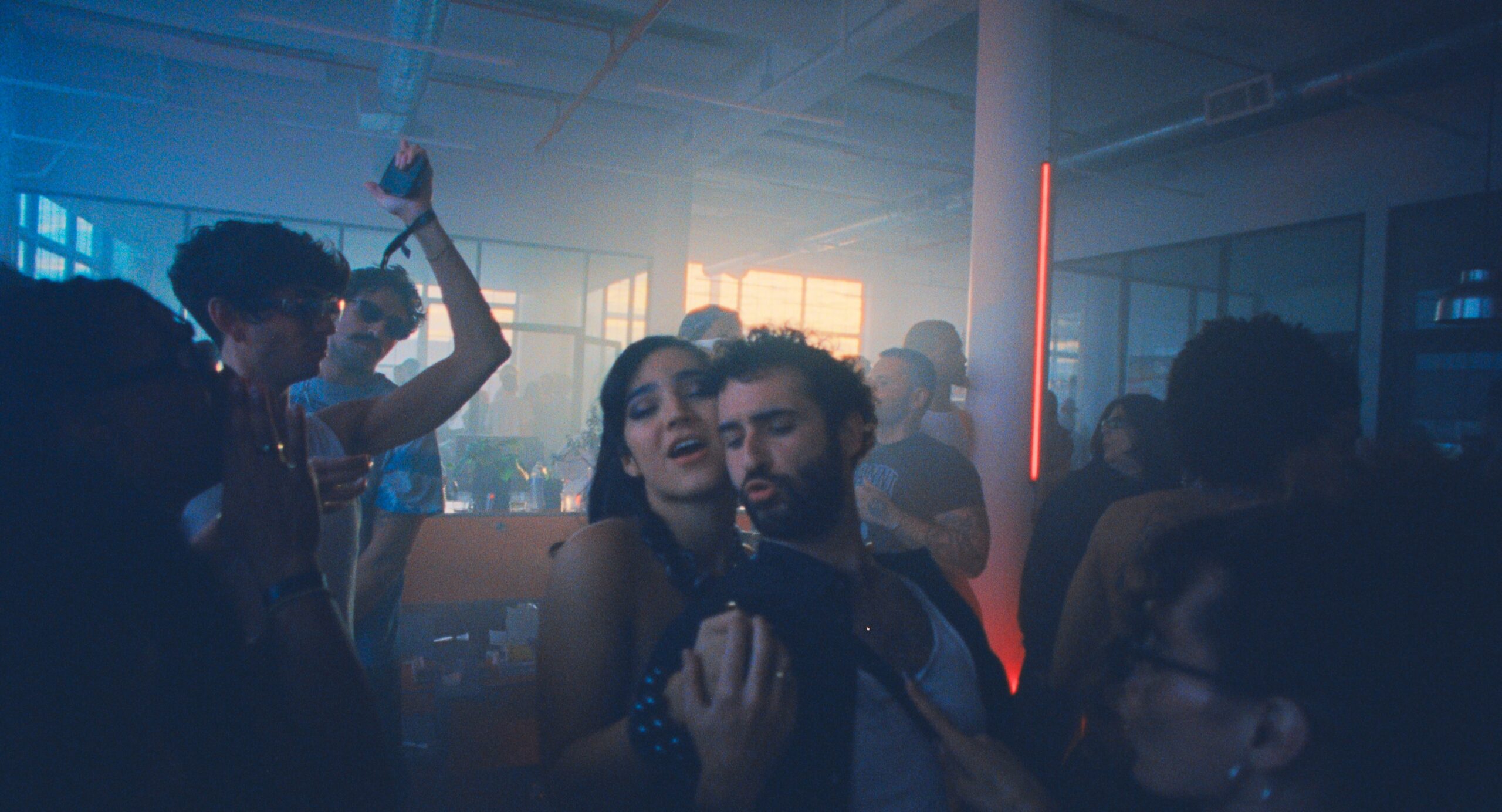
I realized Jordan Firstman’s feature debut, Club Kid, was bound to strike a chord with me from the moment it announced its initial style and form to its audience. The camera dizzyingly introduces Peter (Firstman) and his entire crew of party animals within the packed confines of a drunk Uber ride through the East Village. If that wasn’t enough to solidify my bond with this film on a spiritual level, the merry band of individuals play unprompted carpool karaoke to a Rihanna anthem as loud as possible. All these twenty-somethings are having the time of their lives headed from one party to the next, meanwhile the Uber driver is as silent as can be, soaking up the reality of his particular situation through sobering silence. It’s this dichotomy which crystallizes the setting Club Kid exists within; the beautiful and bewildering contrasts of New York City, alongside the individuals which exist within it.
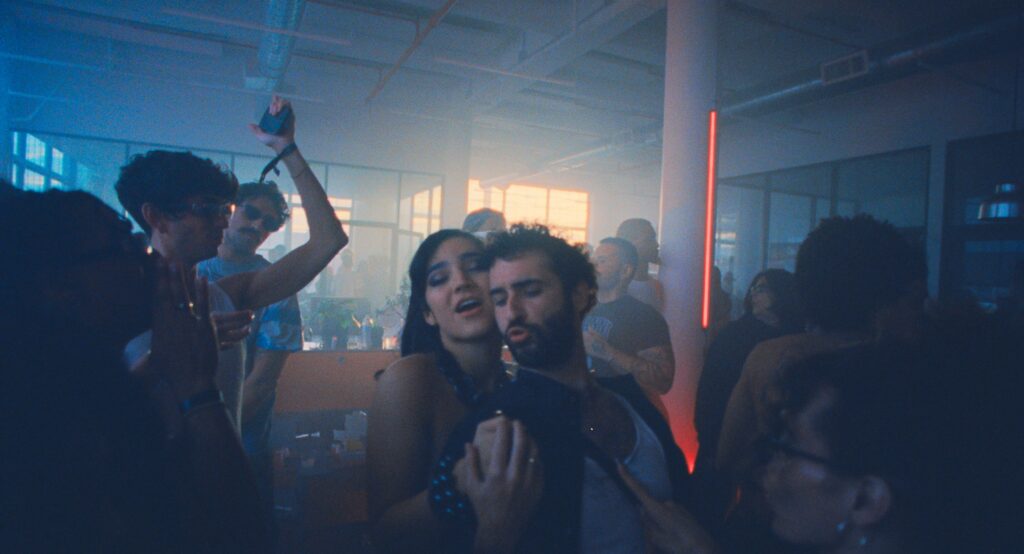
Peter and his crew of friends make it to the infamous Market Hotel, and step into a world completely operating at its own pulse within the larger ecosystem of New York nightlife. The strobe lights are dizzying, people are shouting greetings or inside jokes to Peter, and everybody is looking for that special something to amp up their evening tenfold. It’s a hectic introduction to the film, but one that bursts with youthful energy and complete freedom of expression. We come to learn this is Peter’s party, and if he and friend/business partner Sophie (Cara Delevingne) know how to throw quite the blowout bash, then Firstman and cinematographer Adam Newport-Berra clearly have an acute sense of how to shoot one. The party scenes alone, of which there are plenty throughout Club Kid, make Firstman’s film an absolutely delightful example of entertaining cinema. There’s just such life brimming throughout all of these sequences, from the distinct songs soundtracking the sea of bodies moving to the ways in which each musical track can be excitingly disorienting, keeping the audience on edge in the sense that we never quite know exactly where they’ll go next. Of course, this can function as a double-edged sword, and as the film’s dramatic core opens up to reveal all the vulnerabilities within it, what was once exciting can now feel restrictive and frightening.
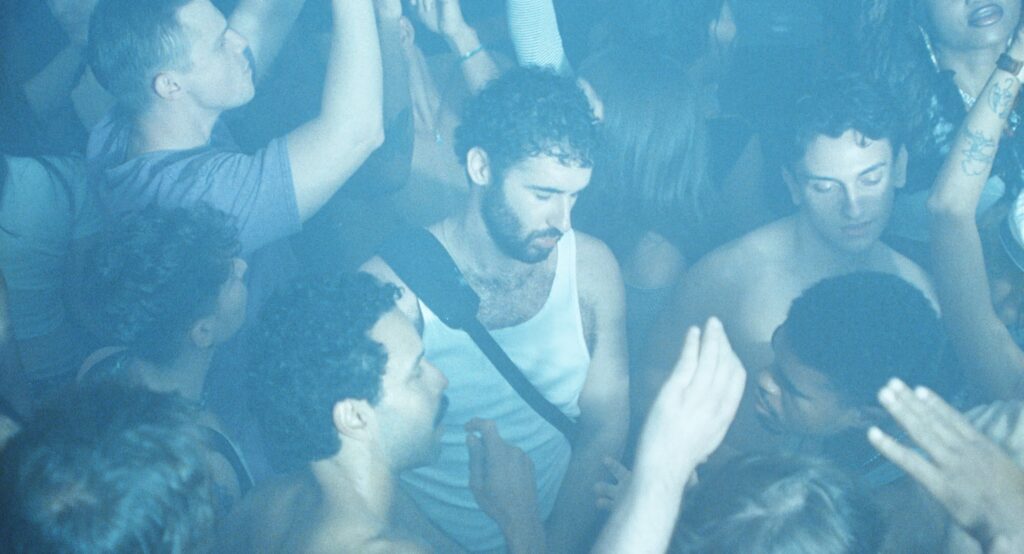
As the party comes to a close but for a select few finding it impossible to leave, Peter included, the film smash cuts to a decade or so later in a stark transition. Peter wakes up in shock in his absolutely barren room, downing an entire bottle of water while attempting to ground himself to the time, his own location, perhaps even what day it is. One can assume Peter has been living this reckless, carefree lifestyle for going on a decade now, and it has obviously taken its toll. Beyond the exhaustion apparent in Peter’s eyes, everything in the film provides the audience with the sense that he’s almost incapable of doing anything in a more regulated fashion. Despite a business meeting regarding the future of his and Sophie’s party planning venture, he ends up beyond blasted at another party and stumbles directly into their brunch late, still wearing last night as if he’s heading to the final postgame. The immense comedy of seeing Peter having cocaine fed to him like a baby receiving medicine in a public bathroom is obviously funny because Firstman has such a wonderful and defined screen presence. Yet it’s a scene which is obviously bathed in a complete sadness, as all the imagined wake-up calls in this man’s life clearly haven’t worked. Although that all changes when Peter arrives home to discover some truly life-changing news which shifts Club Kid into its next level and a higher emotional gear.
Lo and behold, Peter has a child he never knew about. It’s a shocking revelation, captured with complete clarity in the incredibly lit Canal Street loft Peter calls home. As the natural light pours into Peter’s apartment, it’s as if he is finally being pulled into waking reality from a decades long slumber of excess. He is then bogged down by an overwhelming amount of information regarding 10-year-old Arlo (the extraordinarily sweet and charming Reggie Absolom). It’s an immensely heavy situation, but Firstman finds a way to inject enough levity into the scene that the moment never becomes dour. It’s a balance that Firstman fine tunes the longer the film plays out, making for some moments in the third act which genuinely reveal a shocking amount of pathos and earnest emotional depth to be found in Firstman as a performer. His typical brand of irony and overblown humor is all still present throughout Club Kid, but the ways in which he makes these traits feel like Peter’s coping mechanism for the sadness and self-esteem issues within his character is a wonderfully honest and refreshing take on such a familiar character archetype.
For the first 30 minutes or so of Club Kid, Firstman delivers a delightful film to his audience. But once Peter begins bonding with Arlo in basically every scene moving forward, Club Kid becomes one of the most enriching and endearing films of the year. The arrival of this child allows Firstman’s script to explore so much: ideas ranging from the potential we have to change as individuals to the passage of time being reflected on through the things we never fully gave ourselves over to, or the simple yet touching notion of rediscovering the wonder of the world through the eyes of somebody learning all about it for the first time. Arlo (who has been living in the UK his whole life) finds himself looking at a view of New York City that will feel deeply familiar to many who have grown up. As he looks to Peter with what feels like a galaxy of stars in his eyes, Firstman delivers a line so simple and pure, I could tear up merely thinking about it: “It looks like that every time.” We can become so bogged down in our inner thoughts and fears and struggles that we can fail to remember just how much beauty exists around us at any given moment. That’s not to say we walk around purely ignorant of our surroundings the older we get. But we can sometimes unfortunately push away our desires or what will allow us the opportunity to better ourselves simply because there are paths of less resistance which provide more comfortable familiarity. These familiar paths of life, much like the repeating grooves of a nasty bass line or body-shaking drum kicks at a dance party, can lock us into a rhythmic trance; and they can start to become frightening if we lose our sense of balance. So here comes Arlo, this complete unknown operating at his own distinct rhythms, leaving Peter to catch up or be left behind.
As the film enters its third act, the beat breaks and the sobering silence settles in akin to when the lights come on and the music is cut off after a long night out. Club Kid again takes a complete tonal turn, and Firstman takes this difficult stride as a filmmaker head on. It’s a shift that works to great effect yet again. The story beats of Club Kid may feel largely familiar at times, but how it circumvents feeling bland is what allows this film to feel distinctly special. It often sheds a lot of Hollywood flourish and dramatic excess for something much more genuine, feeling more akin to something off-the-cuff and raw which speaks to the unknowability of us all as people. Life is out there waiting to be lived. For Arlo and Peter alike, it seems to be all out there just ready for the taking. Club Kid may feel slightly underwritten at times in terms of its narrative beats, but the emotional depths it explores carries this film the distance towards being one of the most wonderful cinematic surprises of the year.
Club Kid is celebrating its New York Premiere in the Spotlight section at the 64th New York Film Festival.